

News, research, and policy updates on wildland firefighter cancer risk, exposure, and screening.

Study: Wildfire-Smoke Carcinogens Captured on B.C. Wildland Firefighters’ Respirators
Researchers analyzed respirator cartridges worn by 19 wildland firefighters in British Columbia and detected 496 wildfire-smoke compounds — including 17 known-carcinogen PAHs — on both filters and carbon, reinforcing the case for respiratory protection.
Source: Environmental Research (Elsevier), August 2026 · photo: U.S. Forest Service (public domain)
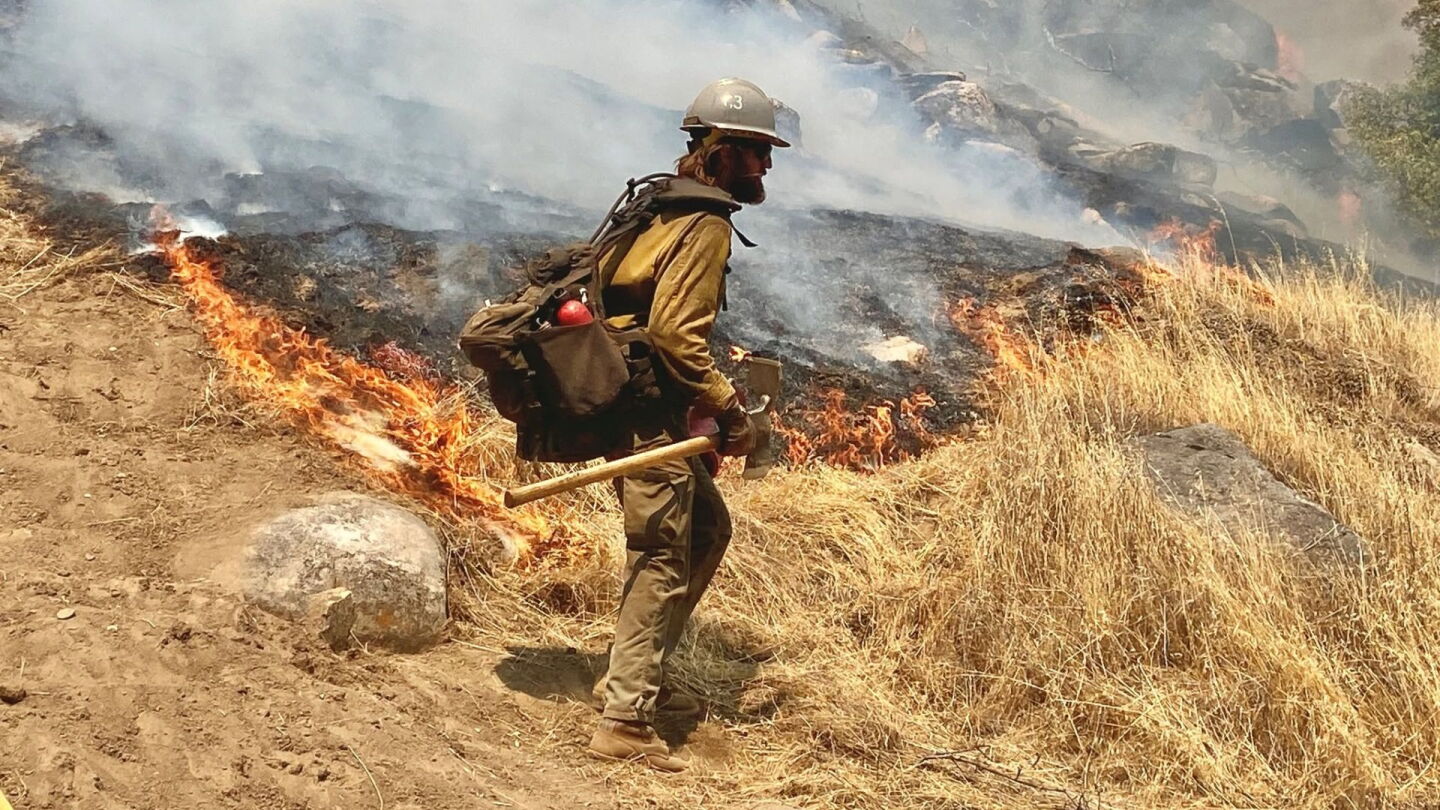
U.S. Federal Wildland Firefighters Cleared to Use N95 Respirators on the Fireline
For the first time, U.S. federal wildland firefighters are authorized to wear N95 respirators on the fireline after training, alongside a standardized daily decontamination program. It reverses a decades-long ban on fireline respiratory protection and sets a North American benchmark for smoke-exposure safety.
Source: FireRescue1, June 2026
U.S. NIOSH Names PM2.5 the Top Wildfire-Smoke Hazard — but Excludes Wildland Firefighters
NIOSH’s final Hazard Review on wildfire-smoke exposure among outdoor workers names PM2.5 as “the primary hazard of concern” and sets out workplace controls — but deliberately excludes wildland firefighters from its scope, leaving a firefighter-specific gap in federal guidance.
Source: NIOSH (Hazard Review, docket 352a), 2026 · photo: U.S. Forest Service (public domain)

Health Effects of Smoke Exposure in Wildland Firefighters
A peer-reviewed narrative review (journal Atmosphere) of 38 studies on wildland firefighters’ repeated smoke exposure found consistent harms — decreased lung function, elevated oxidative stress, higher carbon-monoxide exposure, and cumulative cardiovascular risk.
Source: Atmosphere (MDPI), June 11, 2026 · photo: U.S. Forest Service (public domain)

U.S. OSU Researchers Developing Nanofiber Fabric to Block Firefighters’ Cancer-Causing Smoke Exposure
Dr. Sumit Mandal’s Textile and Apparel Science Laboratory at Oklahoma State University is developing electrospun multilayer nanofabrics that physically trap ultrafine carcinogenic smoke particles before they reach a firefighter’s skin — while staying breathable in extreme heat. Early-stage laboratory work, not yet a commercial product.
Source: The Conversation, June 2026

Wear and Tear Changes PFAS Levels in Firefighter Hoods, Gloves and Wildland Gear
NIST researchers found wear and tear raised PFAS in structural hoods and gloves but lowered it in wildland gear — underscoring why ongoing measurement matters.
Source: Phys.org, May 13, 2026

B.C.’s Bill M-214 (Firefighters’ Health Act): 5-Year Screening Threshold for Wildland Crews
British Columbia’s Firefighters’ Health Act passed unanimously. It mandates a provincial cancer and mental-health screening plan and sets a five-season (~5-year) service threshold for wildland/wildfire crews to qualify, with a review every five years.
Source: BC Professional Fire Fighters, April 2026

U.S. to Pay $450,000 to Wildland Firefighters Who Develop Cancer
Under a new federal program, wildland firefighters who develop one of several job-linked cancers can receive a one-time $450,000 payment and have related costs covered — a major recognition of the occupational cancer risk these crews face.
Source: Wildfire Today, December 19, 2025 · photo: U.S. Forest Service (public domain)

Yukon Premier Backs Presumptive Cancer Coverage for Wildland Firefighters
Yukon’s premier says he supports presumptive cancer coverage for the territory’s wildland firefighters — but offered no timeline for when it would take effect.
Source: CBC News, December 2025

12 Hours in the Smoke: What Wildfire Smoke Does to Wildland Firefighters
A New York Times interactive feature on the wildfire smoke wildland firefighters breathe over long shifts — and the growing recognition of smoke-related illness and death among the crews who fight fire on the line.
Source: The New York Times, October 28, 2025

Long-Range PM2.5 Pollution and Health Impacts from the 2023 Canadian Wildfires
A Nature study quantified how smoke from the record 2023 Canadian wildfires spread fine-particle (PM2.5) pollution across long distances and its population health toll — a measure of the scale of smoke wildland crews work inside.
Source: Nature, September 2025 · photo: Pine Gulch Fire (public domain)

Saskatchewan Extends Presumptive Cancer Coverage to Wildland Firefighters
Saskatchewan extended presumptive cancer coverage to its wildland firefighters, recognizing the occupational cancer risk of repeated wildfire-smoke exposure — a precedent other provinces are watching.
Source: CBC News, August 2025

Yukon Firefighter Urges Territory to Expand Cancer Coverage for Wildland Crews
A Yukon wildland firefighter is pressing the territory to extend cancer coverage to wildland crews, who face repeated wildfire-smoke exposure without the presumptive protections many structural firefighters already have.
Source: CBC News, May 2025

Ontario Wildland Firefighters Seek Stronger Presumptive Coverage (Bill 190)
Ontario’s wildland firefighters called for amendments to Bill 190, which offers presumptive cancer coverage, arguing it doesn’t go far enough to protect crews exposed to wildfire smoke.
Source: CBC News, November 2024

Wildland Firefighter Smoke Exposure and Risk of Lung Cancer and Cardiovascular Disease Mortality
A foundational U.S. Forest Service study estimated that, over a career of wildfire-smoke exposure, wildland firefighters face roughly 8–43% higher risk of dying from lung cancer and 16–30% higher risk of cardiovascular death.
Source: Navarro et al., U.S. Forest Service (Environmental Research), 2019 · photo: U.S. Forest Service (public domain)